I Spent 4 Years Working on Legacy Systems. Here Are the Lessons I Wish I'd Known Earlier.
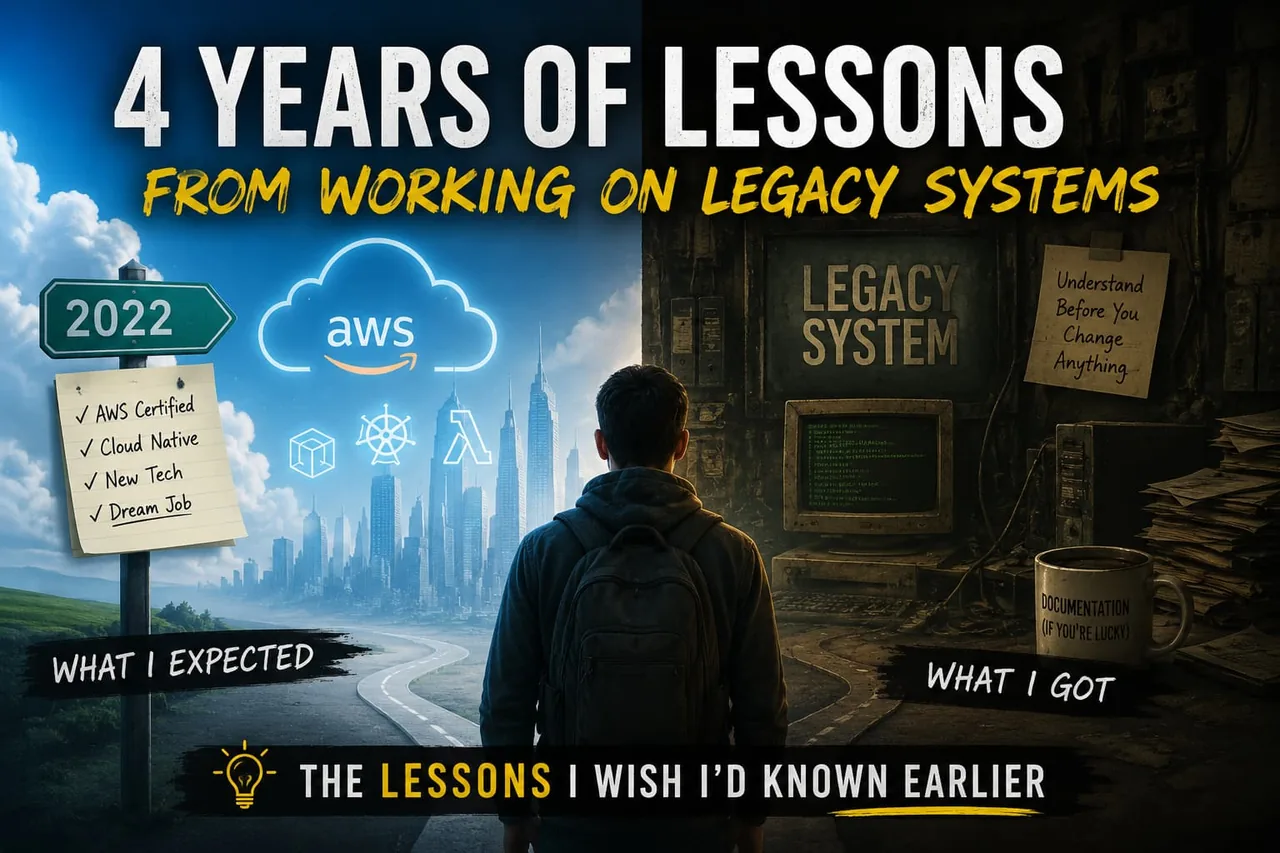
The year is 2022. I've just finished my AWS Cloud certifications and I'm looking for my first job in tech.
At the time, cloud was all the buzz. I was convinced I'd be working on the newest cloud systems with fancy tools and sleek APIs.
I couldn't have been more wrong.
Instead, I spent the next few years deep inside big data legacy systems I didn't fully understand at first.
Looking back, that unexpected turn shaped most of what I now know about software engineering and how real-world distributed systems should be built.
Lesson 1: There Is No Architecture. Only Cron Jobs.
The first thing I learned is that nothing in this system was "modern" as I expected.
Instead, I kept stumbling into crontabs everywhere. And I mean everywhere.
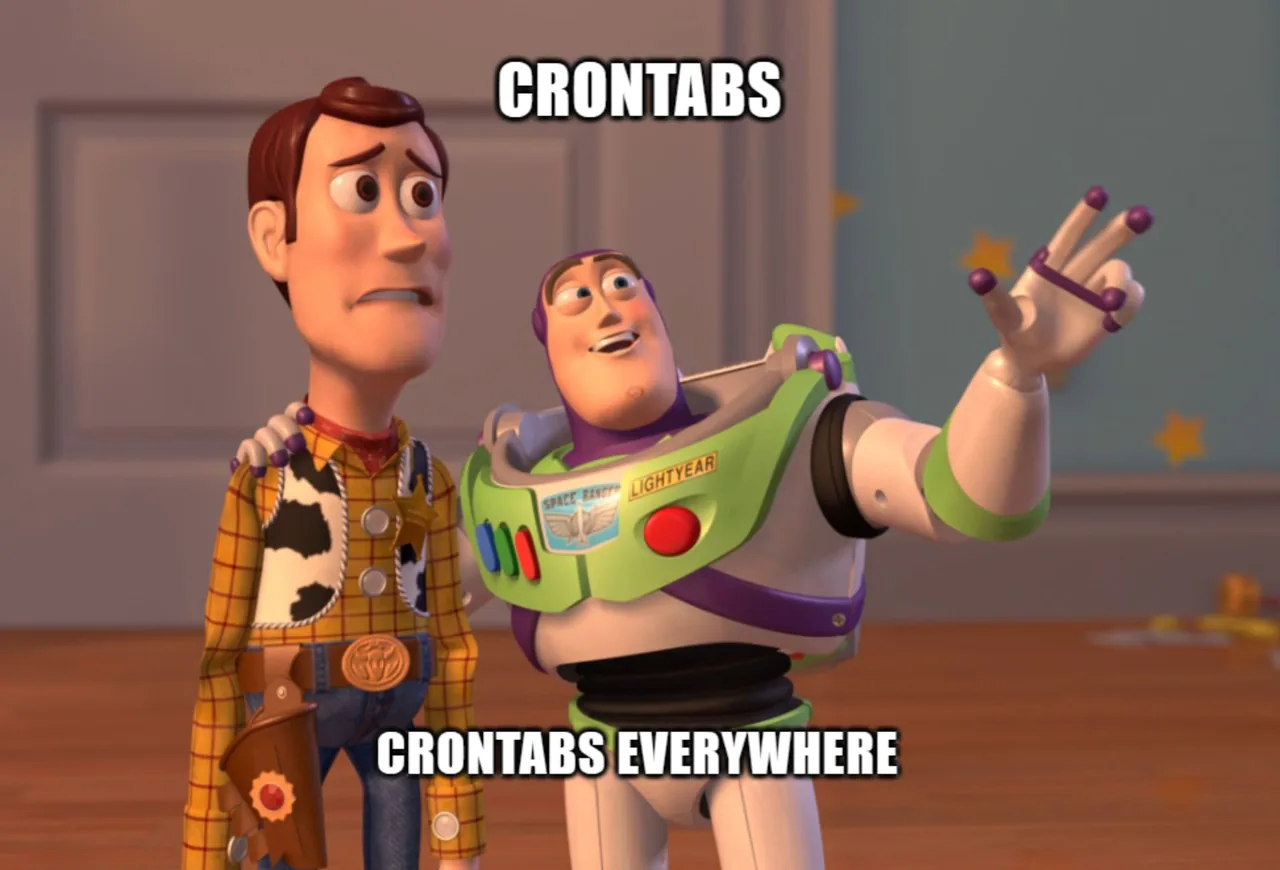
Crontabs weren't just part of the system. They were the system.
In my first few days, I would find random scripts handling everything from database backups to heavy ETL processes or even BI reports, guarded only by ominous code comments reading: "Don't touch."
Nobody was managing them. They were just there running for years, sometimes for a decade, silently doing the heavy lifting.
Here is where the real education began. When a system is built entirely on scattered, unmonitored scripts, you don't learn how to build features — you learn how to survive.
Lesson 2: The Documentation Lived in People's Heads
The second lesson was that documentation wasn't missing.
It just wasn't where I expected it to be.
When I joined, there were very few architecture diagrams, runbooks, or onboarding guides. Most of the system's knowledge existed as tribal knowledge passed down from one engineer to another.
If you wanted to understand why a process existed, you'd hear things like:
"I think that was added after an outage a few years ago."
"You'll have to ask David. He used to own that service."
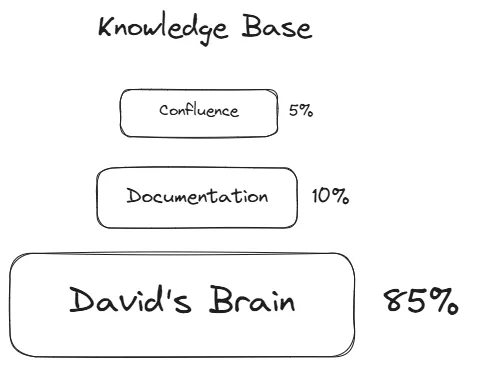
Every system has documentation. Sometimes it's just not in the repo.
The code was easy to find.
The reasons behind the code were not.
Over time, I realized that the real documentation was scattered across old email threads, meeting notes, and the memories of engineers who had left a long time ago.
One investigation led us to a performance problem that had been hiding in plain sight for years.
A misconfiguration in a core component had originally been fixed by someone manually patching the production system.
The patch worked, the incident was resolved, and everyone moved on.
The problem was that the fix never made it back into the deployment process.
Later, a new rpm upgrade replaced the patched files with the original package contents. The manual fix disappeared, caching stopped working again, and nobody noticed.
For years, the application continued running in a degraded state because the knowledge of the original issue had existed only in someone's head.
I spent much of my first year investigating systems with incomplete information. Often, the only way to understand a workflow was to trace it through logs, databases, scripts, and years-old email conversations.
In hindsight, that became one of the most valuable parts of the first years of my career.
It taught me how to build mental models from incomplete evidence, separate facts from assumptions, and understand what was actually happening instead of what everyone believed was happening.
Eventually, I got tired of repeating the same investigations.
So I started documenting everything.
- Runbooks.
- Architecture diagrams.
- Incident summaries.
- Dependencies.
- Operational procedures.
Not because I enjoyed writing documentation, but because I had learned that every undocumented decision eventually becomes someone else's incident.
Lesson 3: The Incident That Lived in an Email Thread
One day, the APIs just stopped working.
No gradual degradation. No warning signs. Just a sudden failure in production.
The customer was bleeding money by the minute.
We immediately went into the war room.
The assumption was simple: something must have changed.
But the system didn't agree.
- Logs showed nothing unusual.
- Metrics were flat.
- Recent tickets didn't describe anything similar.
Every clue led to a dead end.
As hours passed, the incident stopped feeling like a bug and started feeling like a blind spot in the system itself.
At some point, we stopped looking forward and started looking backward.
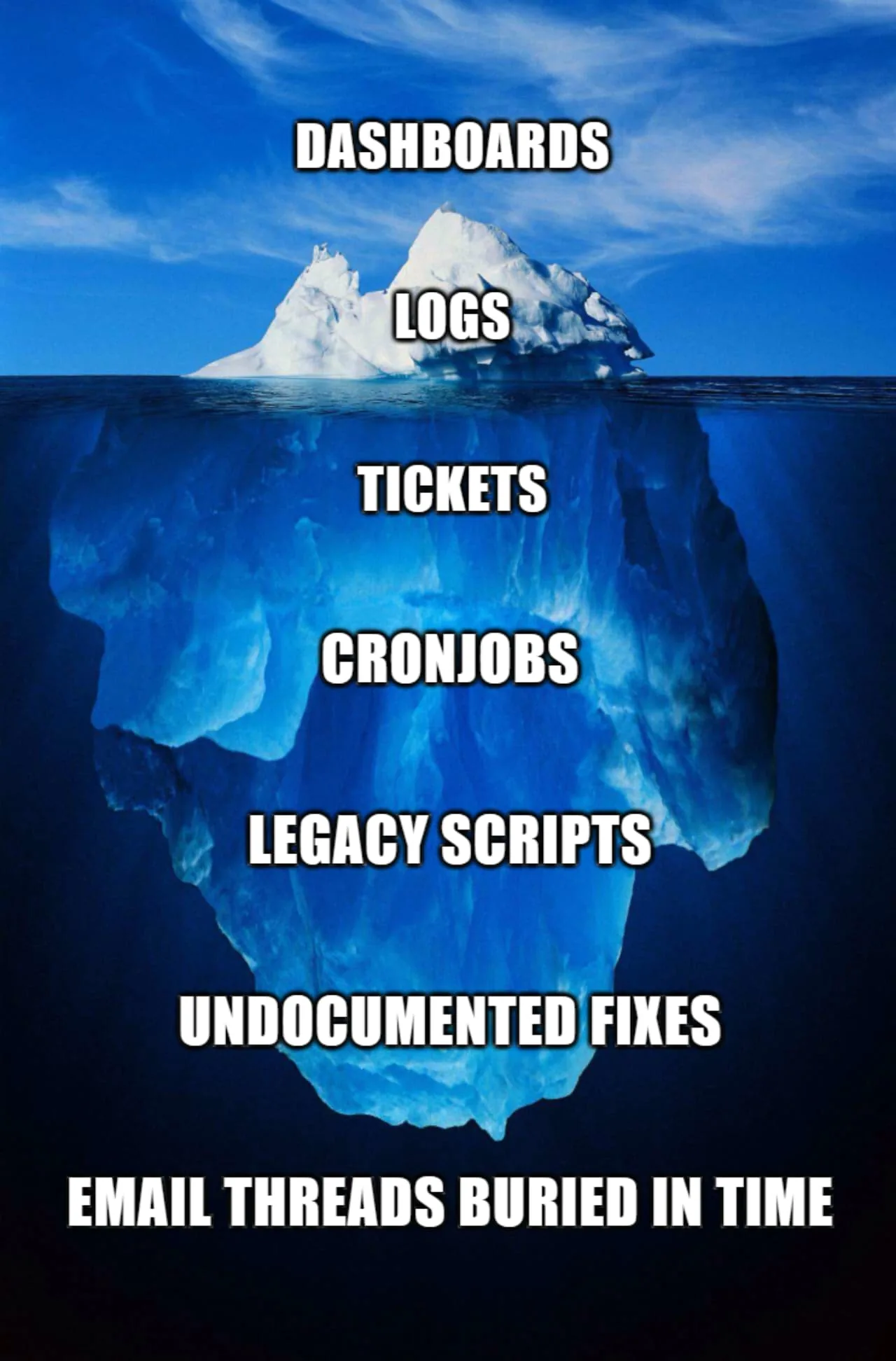
- Old tickets.
- Archived dashboards.
- Historical alerts.
Still nothing.
Then I went deeper. I started digging through archived email boxes of former engineers, searching for anything related to the issue.
Almost by accident, I found it.
A five-year-old email thread buried inside someone else's inbox.
Buried in it was a discussion about a nearly identical failure. The issue had been acknowledged once, long ago, and "resolved" with a manual workaround: restarting a specific internal component.
- No root cause analysis.
- No proper code fix.
- No documentation.
Just a note: "If this happens again, restart service X."
That was it.
We tried it.
The system recovered.
Two days of investigation had led us back to a solution that had existed the entire time — but only in the memory of a conversation most of the team didn't even know existed.
Earlier in my career, I would have treated this as a debugging exercise. After this incident, I started seeing a different problem entirely.
The code was never the issue. The issue was that knowledge about the code had quietly disappeared over time.
That realization changed how I work. I no longer just fix systems. I try to prevent knowledge from quietly disappearing in the first place.
Lesson 4: Assume Ownership When None Exists
After enough incidents, I started observing something important.
Nothing was broken because people weren't doing their jobs.
It was broken because no one was explicitly responsible for making sure it stayed healthy.
Ownership wasn't missing. It was just invisible.
And invisible ownership behaves like no ownership at all.
So I started treating every system as if I were the only person responsible for it.
I started with the cron jobs.
Not by rewriting everything immediately, but by first understanding what was actually running in production. Half of it wasn't documented, and some of it wasn't even known to be critical until it failed.
Once I understood the dependencies, I began untangling them.
Where possible, I moved workflows out of scattered scripts and into orchestrated systems like Airflow or Dagster — not because they were modern, but because they made execution visible, repeatable, and observable.
For the first time, processes that had quietly "just worked" for years became systems I could actually reason about.
But the real shift wasn't technical.
It was behavioral.
I stopped treating reliability work as optional.
Because I had seen what happens when "working" systems are not understood: they don't stay stable — they slowly drift until something finally exposes the gap.
So I started asking different questions:
What breaks silently? What depends on memory instead of automation? What only works because someone "just knows"?
And I removed those dependencies wherever I could.
Deployments came next.
Anything that required tribal knowledge, manual intervention, or implicit steps became a risk. I worked toward making delivery processes deterministic — not to reduce effort, but to reduce ambiguity.
Because in legacy systems, ambiguity doesn't stay harmless.
It becomes the failure mode.
Over time, I realized something that changed how I think about engineering.
Ownership is not about doing everything yourself.
It's about making responsibility unambiguous.
Because when ownership is unclear, it doesn't disappear.
It gets assigned at runtime — to whoever notices the problem first.
And that's a terrible way to run a system.
What Four Years Actually Taught Me
I started in 2022 wanting the newest tools. Clean APIs. Modern cloud. Work that looked impressive.
What I got was crontabs, missing documentation, and incidents that lived in other people's inboxes.
For a long time I thought I'd drawn the short straw.
I hadn't.
Because the most important thing those years taught me had nothing to do with cloud, or tooling, or anything you can put on a certification.
It was this: the hardest part of engineering isn't building the system. It's keeping it understood.
The shiny work would have made me faster.
The legacy work made me an engineer.